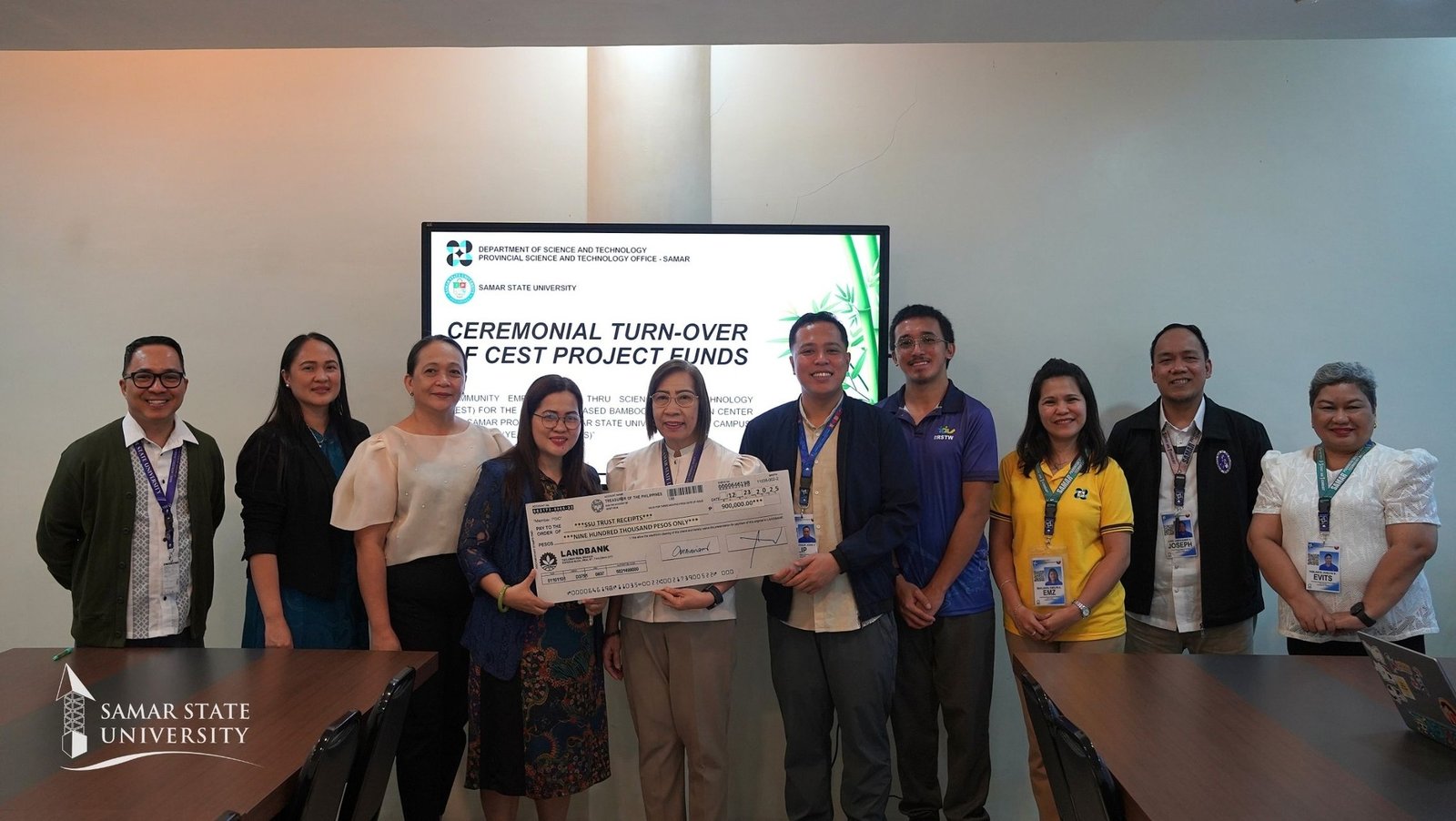
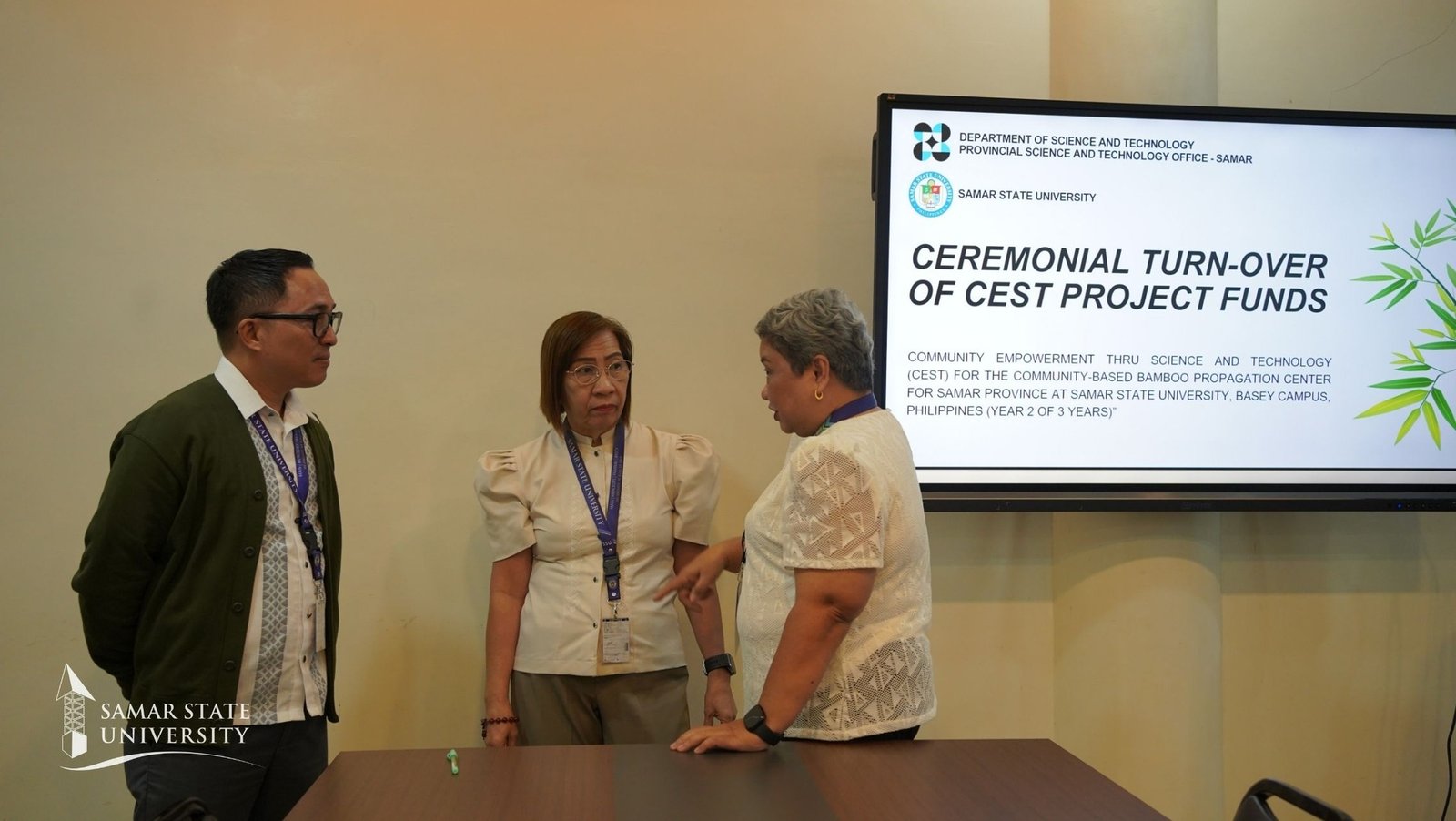
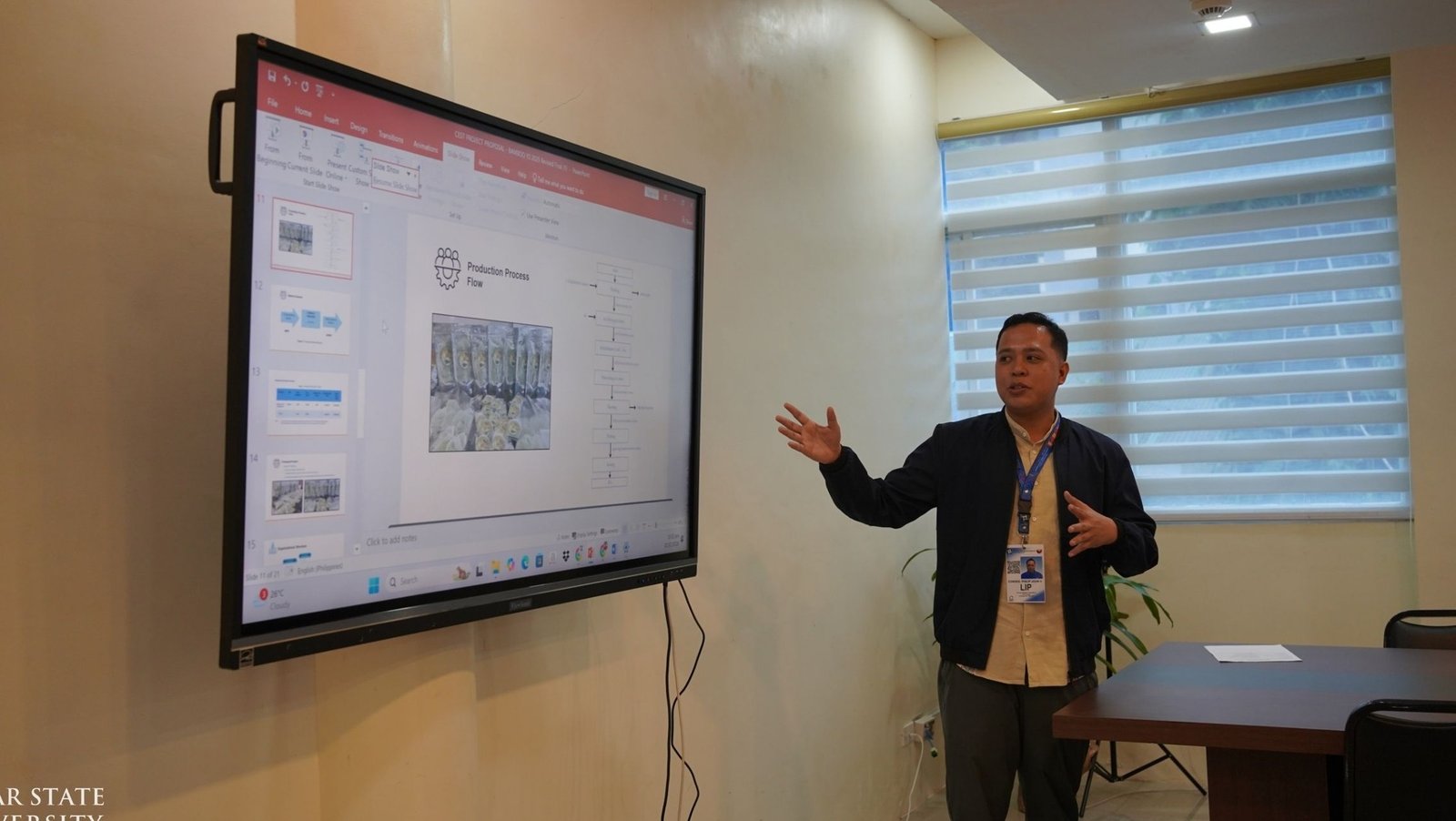
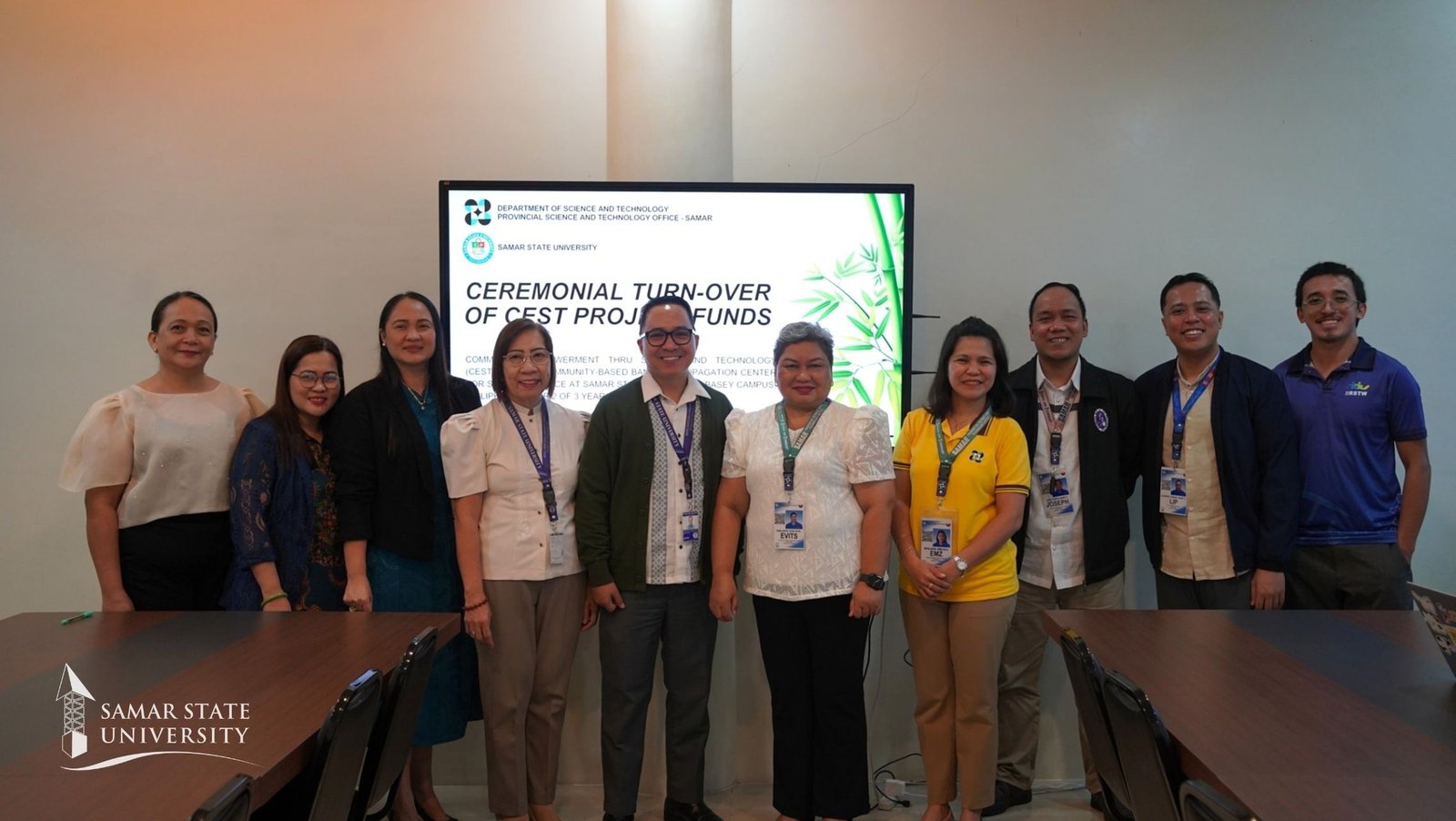
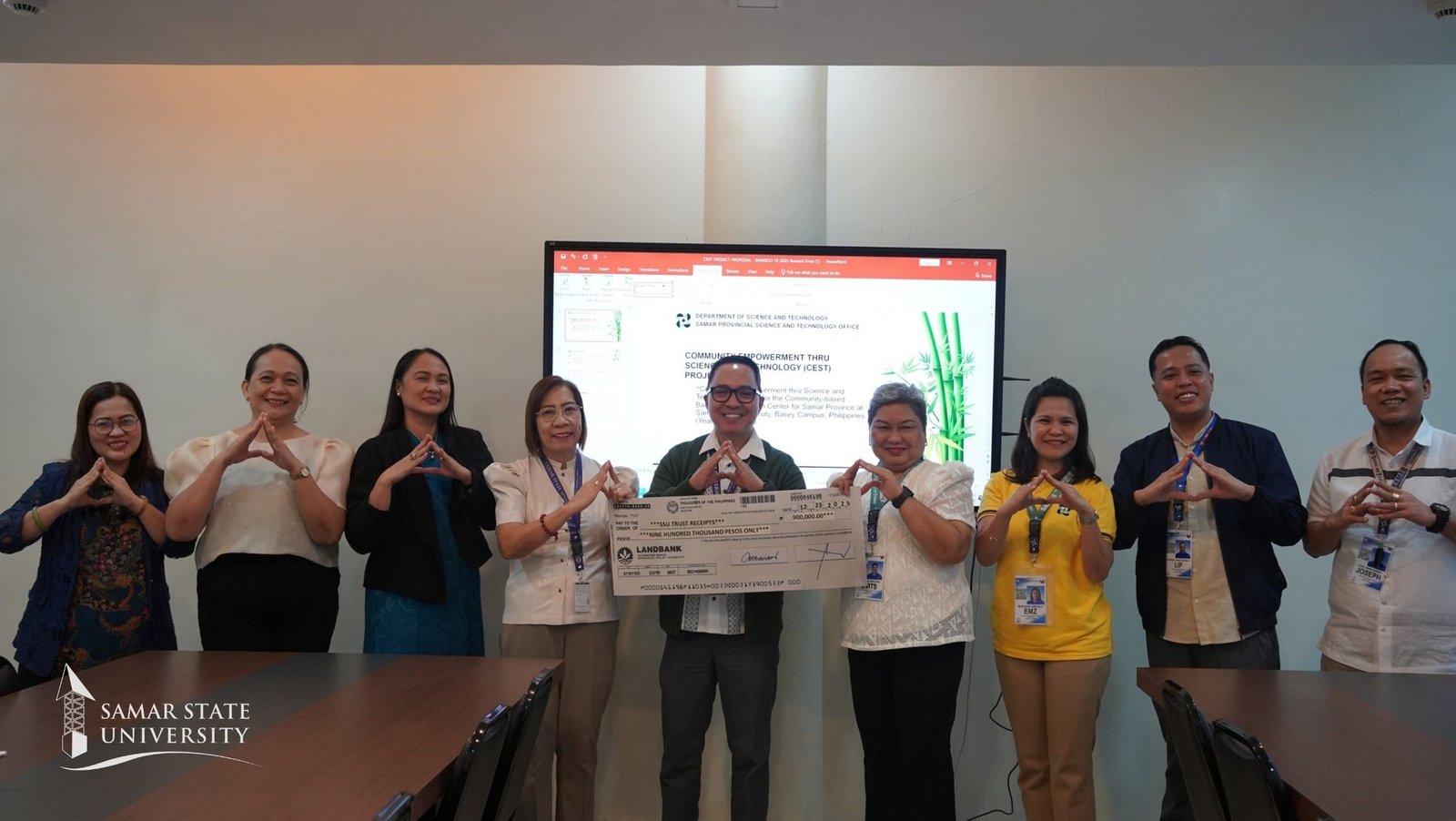
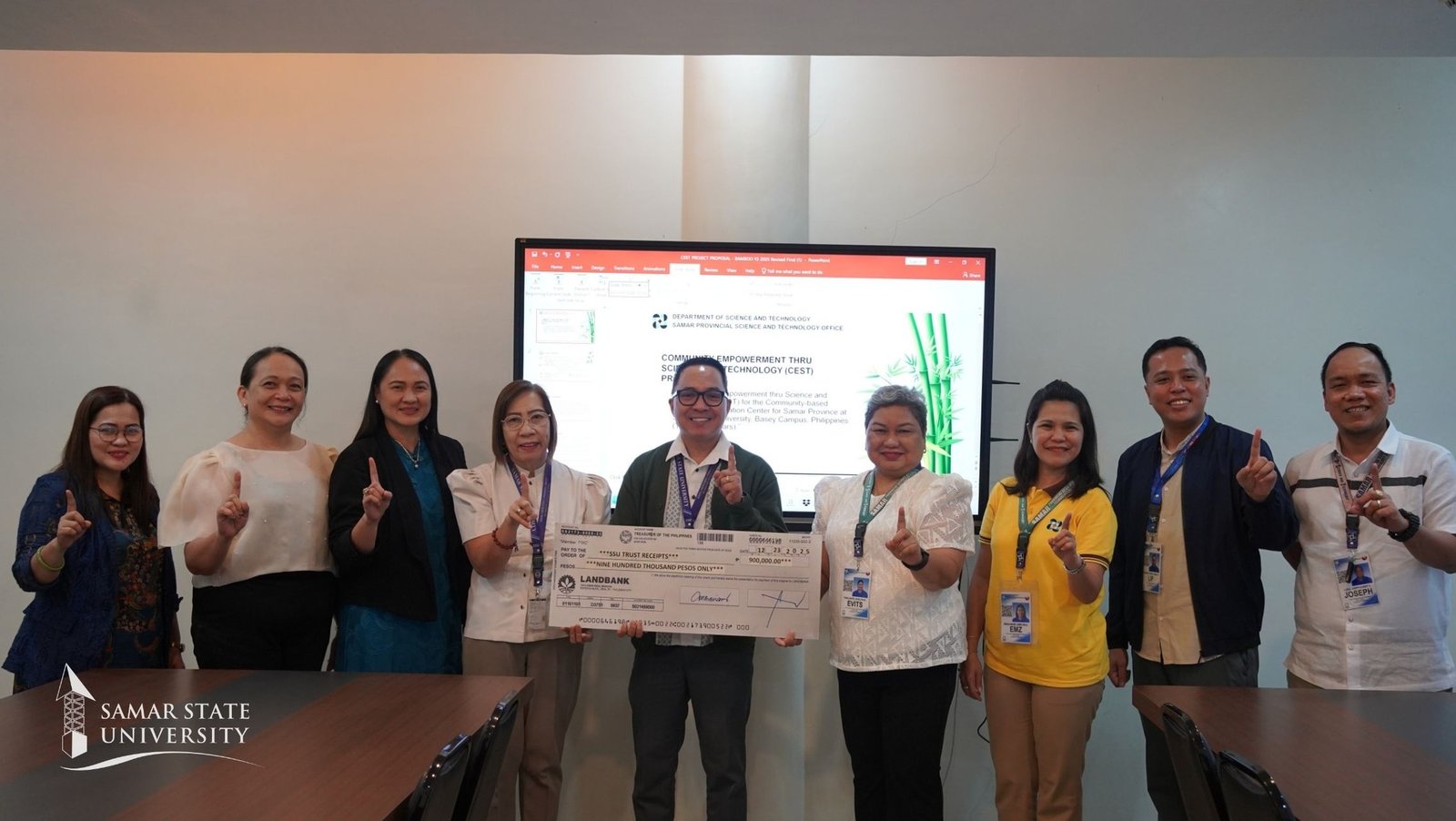
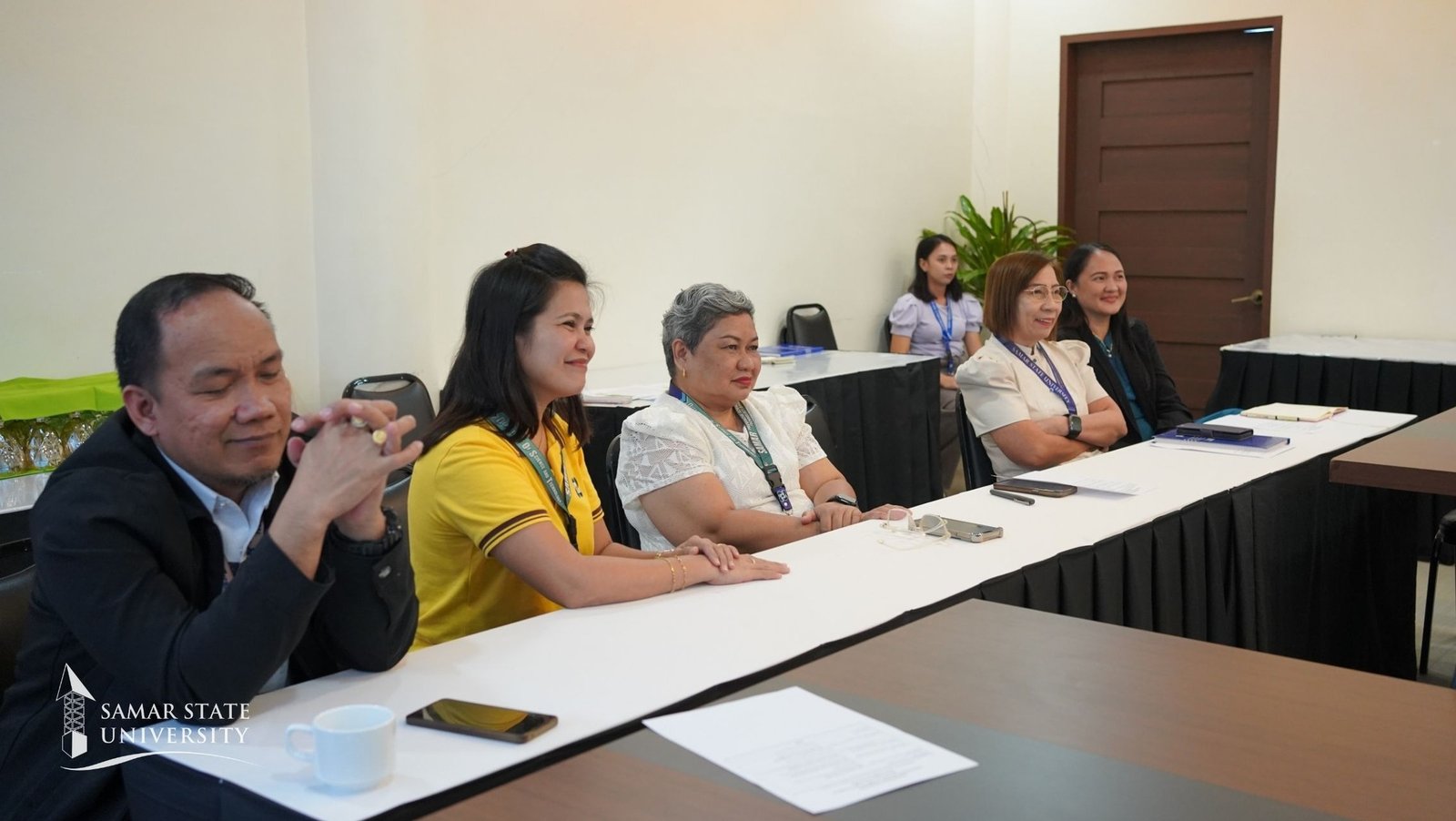
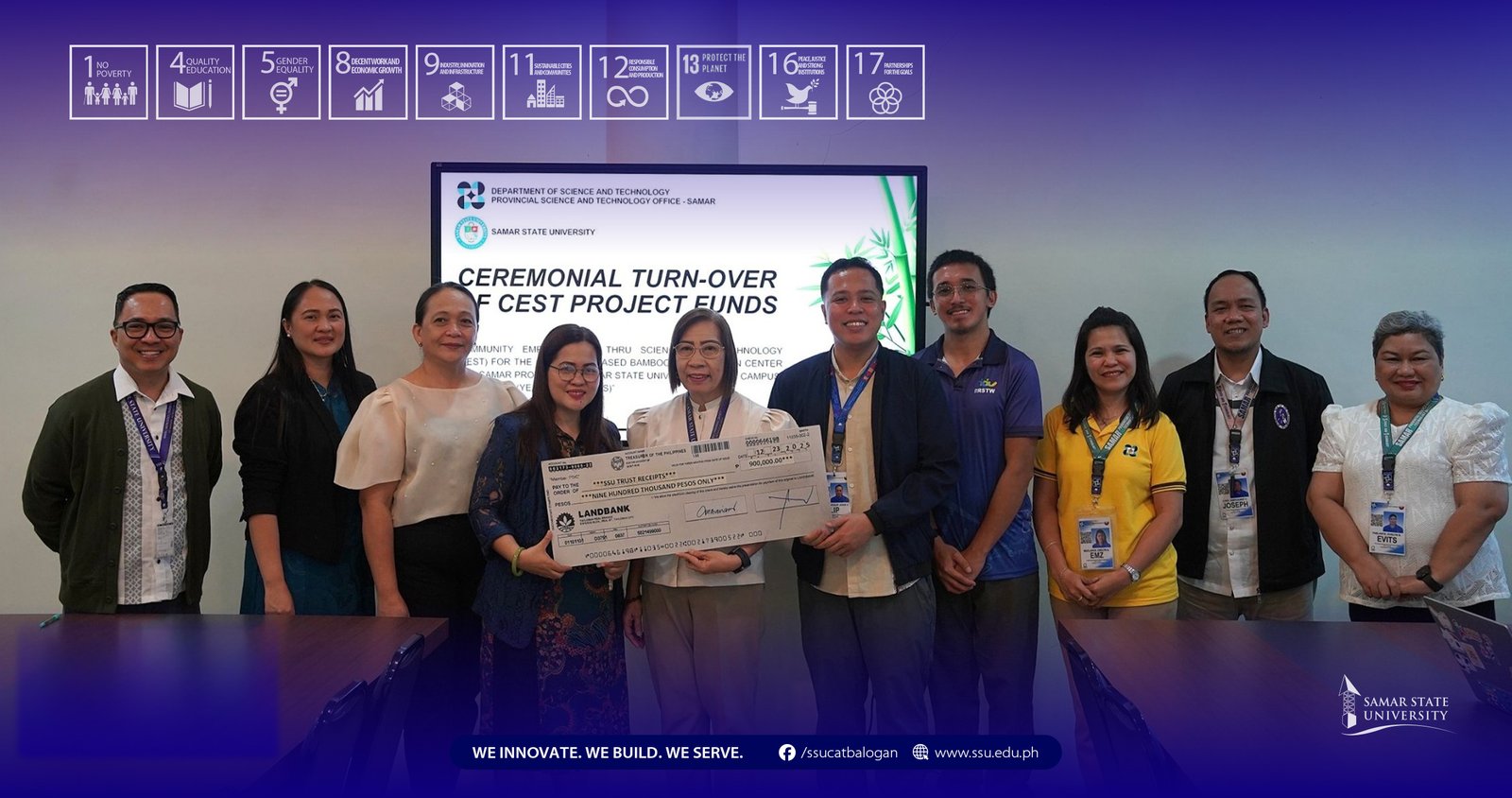
CATBALOGAN CITY, Philippines—Samar State University (SSU) and the Department of Science and Technology (DOST) reaffirmed their commitment to science and community-driven development during the ceremonial turn-over of funds for the Community Empowerment Through Science and Technology (CEST) Project on bamboo propagation today, February 2, 2026, held at the President’s Board Room, SSU Main Campus, Catbalogan City, Samar.
During the ceremony, DOST turned over ₱900,000.00 to support Year 2 of the three-year project titled “Community Empowerment Through Science and Technology (CEST) for the Community-Based Bamboo Propagation Center for Samar Province at Samar State University, Basey Campus, Philippines.” The project has a total cost of ₱1.25 million and is led by Dr. Felisa E. Gomba, with SSU as the implementing agency.
Strong Foundations Laid in Year 1: Transforming Bamboo Farmers into an STI-Empowered Community
At its core, the CEST bamboo project aims to transform bamboo farmers in Basey, Samar into a Science, Technology, and Innovation (STI)-empowered community. Through targeted S&T interventions, capacity-building activities, and strengthened institutional linkages, the project seeks to improve livelihoods, promote environmental sustainability, and enhance access to education and economic opportunities.
The first year of implementation recorded significant accomplishments. A comprehensive survey and validation of bamboo plantations across four (4) barangays in Basey, including Mabini, Loog, Catadman, and Rawis-Guirang were conducted using drone technology. This innovative approach enabled precise mapping and data collection through image splicing techniques.
With support from the Provincial Government of Samar, the project facilitated large-scale bamboo planting across a combined area of over 100 hectares, distributing thousands of bamboo seedlings: 10,000 in Mabini, 6,000 in Loog, 2,800 in Catadman, and 3,000 in Rawis-Guirang.
A 5,000-square-meter Bamboo Propagation Center was also established at the SSU Basey Campus, complete with a greenhouse facility. More than 20 bamboo farmers were trained in propagule potting, while the project exceeded its target by producing 11,000 bamboo planting materials—far beyond the initial goal of 1,000.
Growth monitoring using randomized block design provided valuable data on bamboo propagation, with survival rates closely tracked despite challenges posed by sudden weather changes. Beyond production, the project conducted food technology trainings for over 50 farmers, introducing bamboo-based products such as bamboo leaf tea, bamboo rice, bamboo shoot pancake, siomai, and organic bamboo tea.
Complementing these were Gender and Development (GAD) capability-building activities and entrepreneurial skills training for 40 bamboo farmers, ensuring inclusive participation and preparing communities for bamboo-based enterprises.
Year 2 and Beyond
Building on these gains, Year 2 focuses on sustaining technical skills while laying the groundwork for livelihood generation. Plans are underway to propose a complementary project that will provide food safety–compliant equipment and tools for a start-up bamboo tea processing center, enabling farmers to meet regulatory standards and compete in broader markets.
Looking ahead, Year 3 will concentrate on product development and market expansion, including product certification, quality assurance compliance, e-commerce enablement, and branding of bamboo products as a premium local identity from Samar.
Beyond livelihood development, the project also addresses educational and technological gaps. In partnership with DepEd Samar, the initiative seeks to enhance learning environments through the deployment of Science and Technology Academic and Research-Based Openly Operated Kiosks (STARBOOKS) at SSU Basey Campus and Valeriano C. Yancha Memorial Agricultural School. These interventions are crucial, especially as limited internet connectivity continues to challenge students in rural areas. Expanding the access to digital and S&T resources will stimulate interest in science-related fields and increase participation in technology courses among these intended beneficiaries.
Bamboo Tea as a Sustainable Enterprise
A key innovation under the project is the development of organic bamboo tea, derived from dried bamboo leaves and recognized for its antioxidant and detoxifying properties. The proposed start-up enterprise, led by Assoc. Prof. Janet Caber of the College of Industrial Technology and Dir. Maria Rubi Parrocho of the Research Center for Culture and Social Issues, envisions bamboo tea as an affordable, eco-friendly wellness product.
The business plan emphasizes sustainable sourcing, eco-friendly packaging, and livelihood creation for members of the Dolongan Bamboo Growers Association and the Balante Women’s Association, with plans to expand from local markets to online and institutional buyers.
Creating Long-Term Impact
The ceremonial turnover earlier today was attended by Dr. Redentor S. Palencia, University President, Dr. Felisa E. Gomba, Project Leader and Vice President for Research and Extension Services, and DOST–Samar Provincial Director Evelyn Tablante, underscoring the strong institutional support behind the initiative. Also present were project members from SSU, including Assoc. Prof. Janette Casuco of the College of Industrial Technology and Dir. Maria Rubi Parrocho, Director of the Research Center for Culture and Social Issues. Joining them were Dr. Florabelle Patosa, SSU Executive Director for Extension, along with DOST–Samar personnel Joseph Albert O. Lledo, Emelyn Maglahus, Philip John Condes, and Jincent Mercado, who collectively reaffirmed the shared commitment to advancing community-based, science-driven development in Samar.
“DOST has been with us through thick and thin. May this project leave a legacy to the people of Basey, Samar province, and beyond. May this project be one of the components that will answer the call to decrease poverty in the region. And may these little things become big things, and [be] sustainable in the future. To my co-public servants in the University, keep the fire burning,” President Palencia remarked during the ceremonial turnover.
This significant initiative brings together a wide network of partners, including the Provincial Local Government Unit of Samar, DENR, DTI, DepEd Samar, PENRO Samar, LGU Basey, and the SSU Basey Campus, highlighting a collaborative approach to sustainable rural development. The project aligns with several United Nations Sustainable Development Goals (SDGs), particularly SDG 4 (Quality Education), SDG 8 (Decent Work and Economic Growth), SDG 11 (Sustainable Cities and Communities), and SDG 13 (Climate Action).
As the project moves into its next phases, it continues to demonstrate how innovation, collaboration, and community participation can transform a natural resource like bamboo into a catalyst for long-term socio-economic and environmental resilience in Samar.